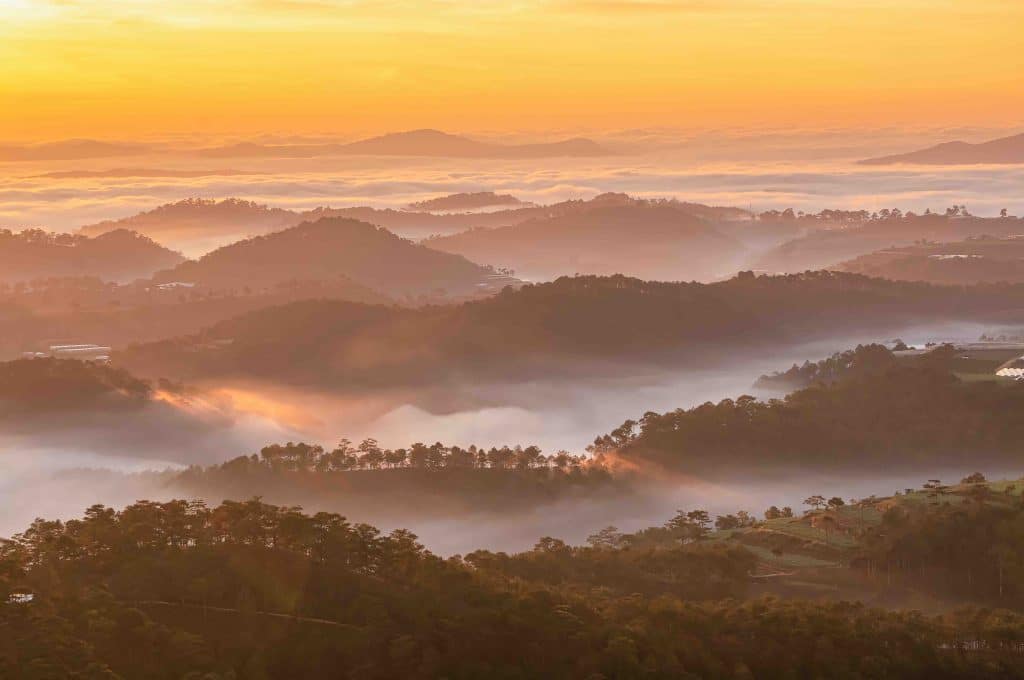
Hon Bo Summit Ridge
04:30–06:30
The primary ridge offers an unobstructed 360-degree perspective of the valley floor covered in mist.

Hon Bo Peak stands as one of the most accessible elevated vantage points for observing the phenomenon of low-altitude cloud formations blanketing Da Lat's valleys. The summit provides 360-degree sight lines across the Central Highlands terrain, positioning visitors above the thermal inversion layer that traps overnight mist. Free access and round-the-clock availability make it a practical choice for pre-dawn positioning.
Quick answer
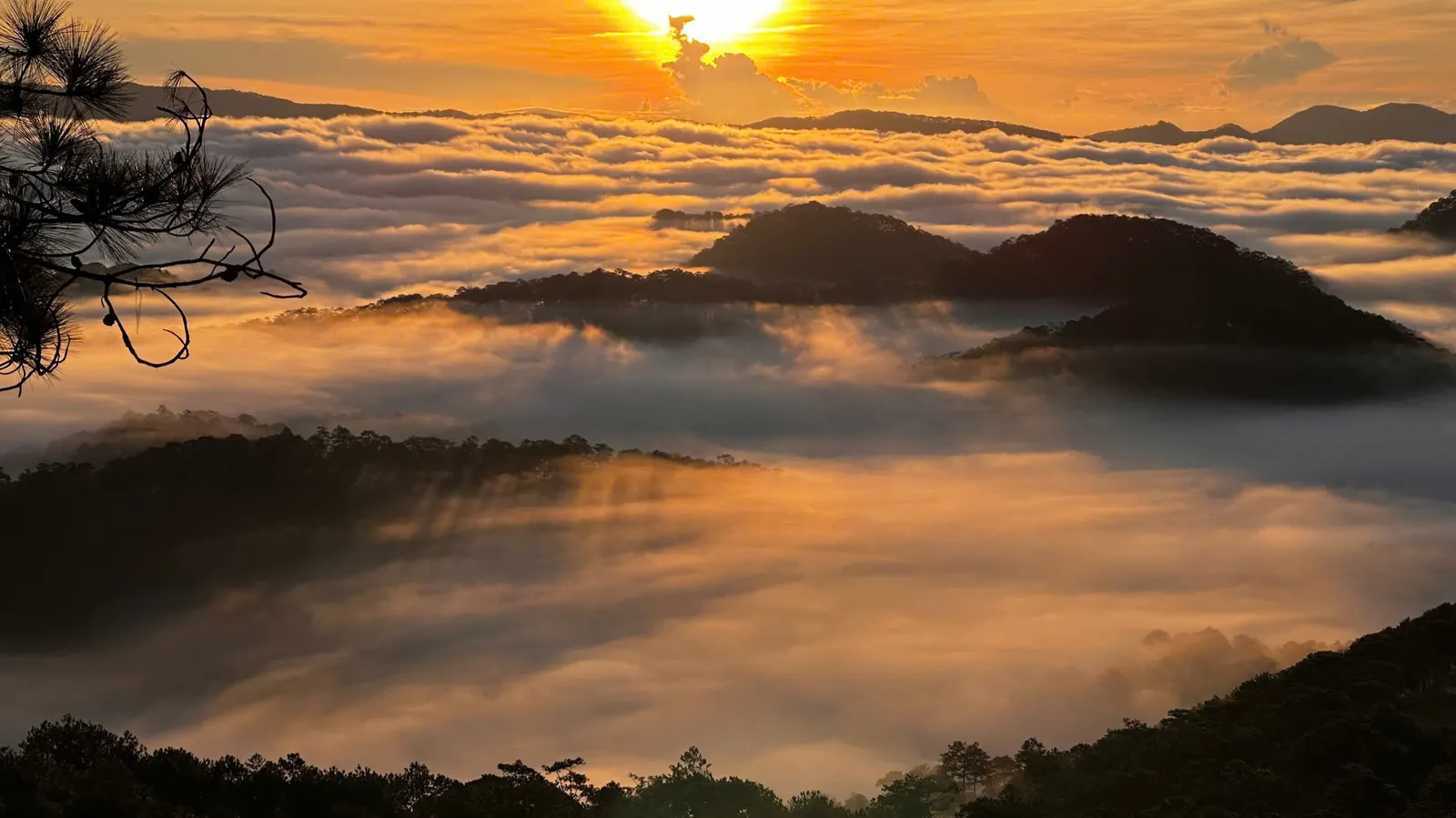
The site operates 24 hours daily with no entrance fee, allowing visitors to position themselves at multiple observation platforms before sunrise. Arriving between 04:30 and 06:30 ensures you witness peak mist conditions as thermal dynamics create a sea-of-clouds effect across the valley floor.
Hon Bo Peak rises 1,567 meters above sea level, placing it roughly 70 meters higher than the Da Lat city center and well above the overnight temperature inversion zone that forms between valley floors and ridgelines. This elevation differential creates the optical phenomenon visitors seek: a dense stratum of mist sitting in topographic depressions while peaks protrude like islands. The summit area features three distinct observation zones, each offering different compositional advantages for cloud hunting in Da Lat's highlands. The eastern platform faces the direction of sunrise, where first light ignites the cloud layer in gradients of amber and rose. The northern viewpoint overlooks a broader expanse of the Lang Biang massif, with multiple ridges creating layered silhouettes against the mist. The western edge provides sight lines toward Tuyen Lam Lake, where the water surface often emerges from the clouds as a dark mirror. These positions are not marked or developed infrastructure—they are natural clearings along the ridgeline where terrain permits unobstructed views. Thermal dynamics drive the cloud-hunting window. Overnight radiative cooling causes air in valleys to lose heat faster than air at elevation, creating a temperature inversion that traps moisture as ground-level fog. As solar heating begins after 06:30, convection breaks down the inversion layer and the mist disperses upward within 90 minutes. The phenomenon occurs year-round but intensifies during the dry season from November through March, when clear nights produce stronger inversions. Hon Bo's accessibility sets it apart from more remote cloud-viewing peaks in Lam Dong Province. The absence of entrance gates or operating-hour restrictions allows visitors to arrive during the optimal 04:30–06:30 window without coordination barriers. Cell signal coverage reaches the summit, providing navigation assistance and communication reliability that higher-altitude sites in the region lack. These practical factors make Hon Bo Peak a reliable answer for those determining where to go cloud hunting in Da Lat when balancing spectacle with logistical simplicity.
“The summit area features three distinct observation zones, each offering different compositional advantages for capturing the valley mist.”
The best arrival window for Hon Bo Peak is 04:30–06:30. This timeframe captures the dawn light and stable atmospheric conditions required for mist and cloud formation before they dissipate as temperatures rise.
Cool, 12°C–20°C, clear skies
Dry weather increases the likelihood of consistent morning cloud cover.
Humid, 15°C–22°C, frequent rain
Heavy rainfall can obscure visibility, though clear mornings occur between showers.
—
Fewer visitors allow for unobstructed positioning for photography at the peak.
Verdict: The optimal slot is weekday mornings between November and April, arriving strictly during the 04:30–06:30 window.
04:30–06:30
The primary ridge offers an unobstructed 360-degree perspective of the valley floor covered in mist.
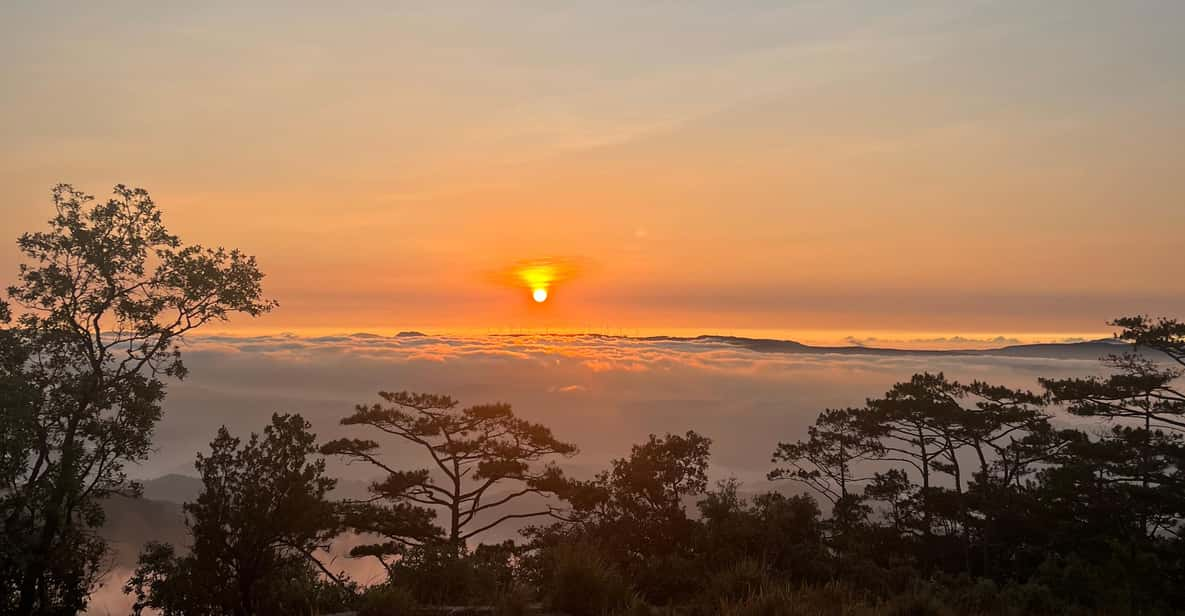
04:30–06:30
A wide, open space facing the rising sun, ideal for capturing the light hitting the cloud layer.
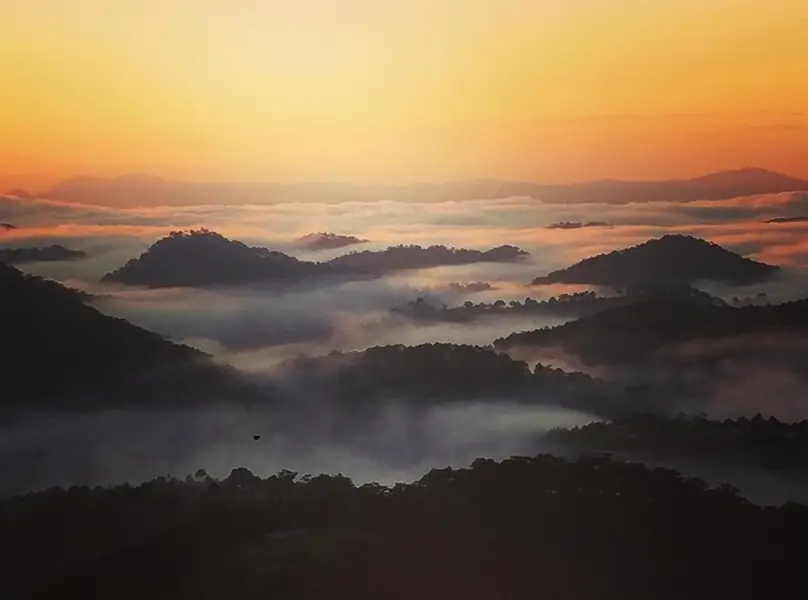
04:30–06:30
This point provides a vertical vantage, perfect for framing the dense cloud sea against the distant hills.
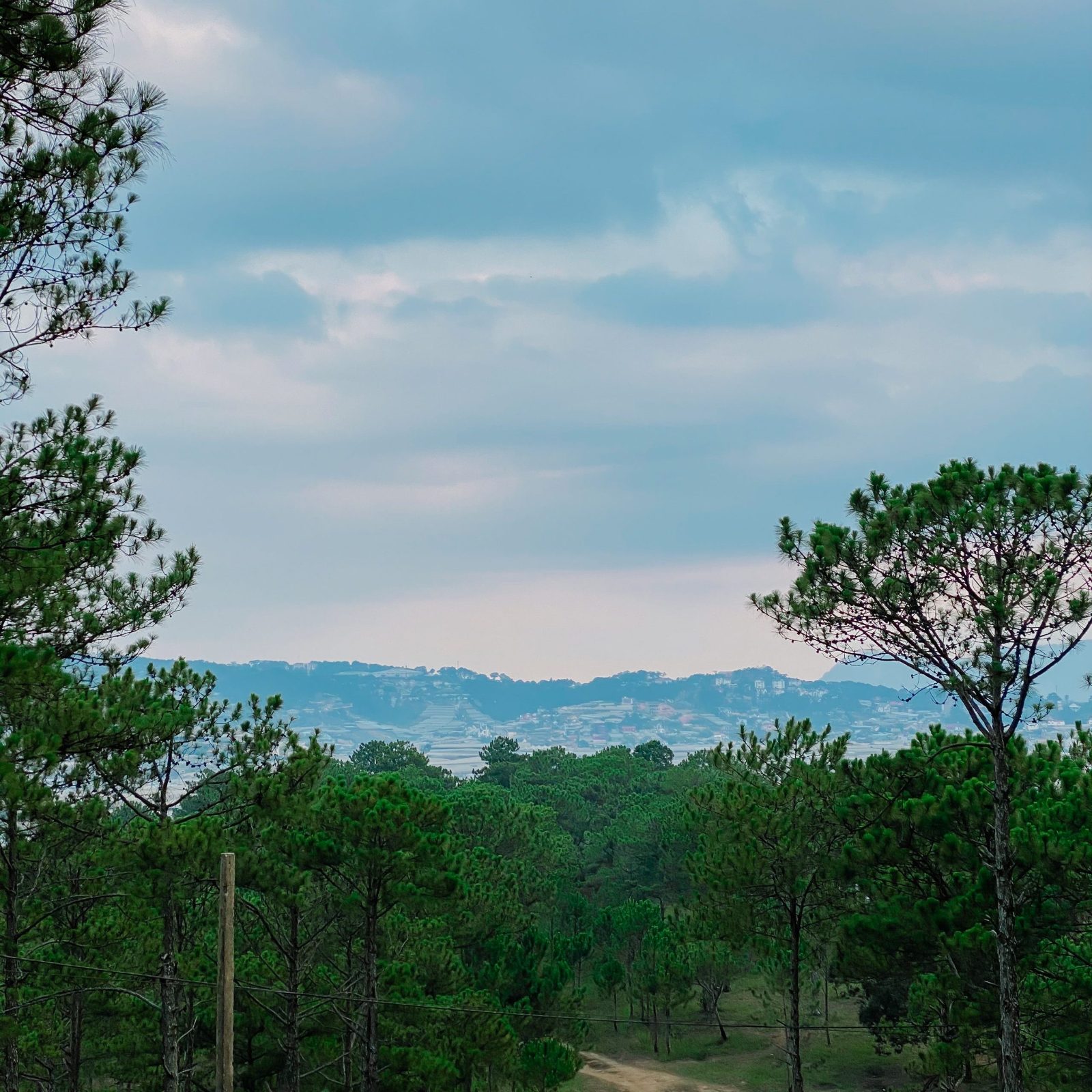
04:30–06:30
An elevated position surrounded by pine trees, creating a framed composition of clouds through the branches.
Hon Bo Peak sits at 1,500 meters elevation where early morning temperatures drop to 10–15°C and pre-dawn darkness requires preparation.
Everything you need to know about where to go cloud hunting in da lat
Hon Bo Peak is a popular natural destination for those wondering where to go cloud hunting in da lat due to its elevation and clear horizon. It offers a raw, open terrain that provides an unobstructed view of the valley below. Visitors frequently seek out this spot to experience the sea of clouds phenomenon.
The most common mistake is arriving too late after the sunrise. Clouds often lift quickly once the sun peaks over the horizon, ending the ideal photo opportunities. Planning your arrival carefully is essential for anyone researching where to go cloud hunting in da lat.